


Charlotte’s marine ops serving Gasparilla Sound

The Charlotte County Marine Unit has been around for over 20 years. Matthew McElroy, who last week was appointed fire chief and public safety director for Charlotte County Public Safety has been around since the unit’s inception.
In 2002, Chief McElroy began his career with Charlotte County Fire & EMS. He helped develop the Marine Unit and was a Battalion Chief and Lieutenant while he was in the field.
“Our Marine Operations team consists of a total of 32 personnel broken apart in between two stations,” McElroy said. “Station Four is the one that runs out of that Gasparilla Marina area, which we call Marine One. And then we have another vessel that runs out of Punta Gorda. Both have fire pumps, fully staffed crews and also are able to carry narcotics and give Advanced Life Support (ALS) care when they’re out on the water. So, the level of training is that all of our team members are Coast Guard captains, along with Swiftwater technicians. They are rapid rescue diver certified, which is an extra class that they do, so we are able to do that all-hazards response on the water.”
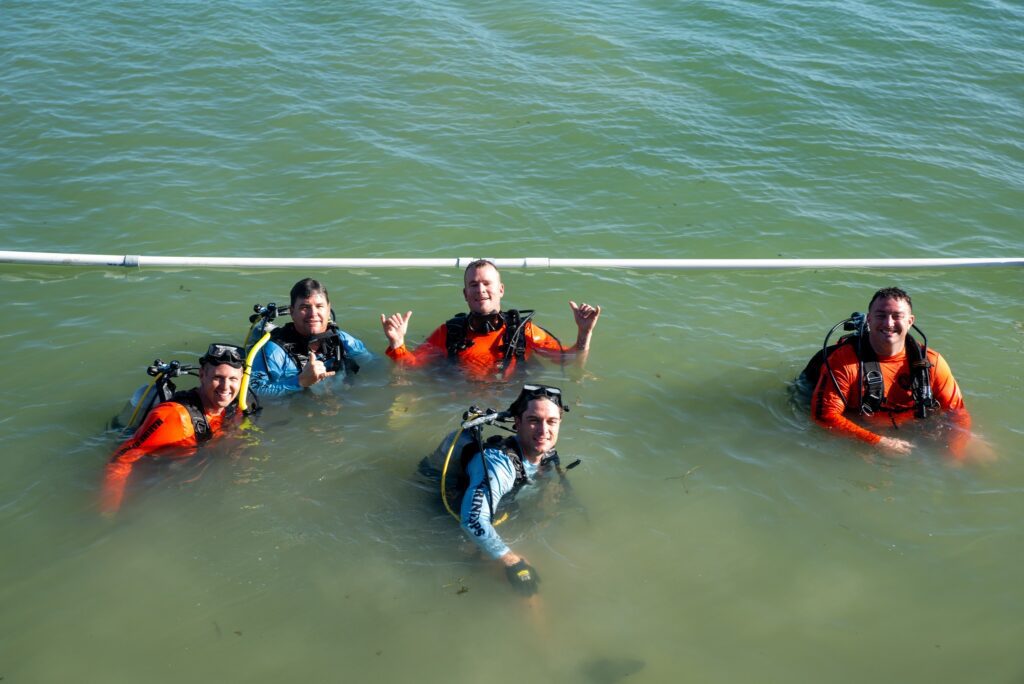
Swiftwater Rescue Technicians are certified to perform rescues in fast moving water or floods. For example, the night of Hurricane Helene in 2024, the Marine Unit assisted with 200 water calls.
McElroy teaches rapid diver training, which is a certification that allows responders to perform submerged victim rescues using specialized scuba gear.
“We had a call a couple years back when we first initiated our rapid rescue dive program where a vessel came in through Boca Grande Pass and it overturned,” McElroy said. “It had a person trapped inside the boat; the other guy got out. So we responded to that with our dive team and actually were able to go inside that vessel and help pull them out.”
The Marine Unit that operates out of Station 4 off Marathon Boulevard in South Gulf Cove is staffed by a total of five people who go back and forth between the boat and Station 4.
“It’s just like an ambulance is what it boils down to – an ambulance or a fire truck – so it’s able to provide fire response to the barrier islands, and also to assist on boat fires and things like that, as well as do EMS calls whether they be on the land, on one of the islands or on the water. Marine One responded to 83 incidents, and Marine Two responded to 46 incidents this year alone,” he said.
The Marine One vessel is a 34-foot-long metal craft with two inboard motors and pump capacity of 1,750 gallons of water per minute.
“Typically, it flows more than any of our fire trucks,” McElroy said. “What’s unique about that boat is it’s a jet drive boat. So it’s got two 306-horsepower motors, but they shut down one motor and that turns into the fire pump.”
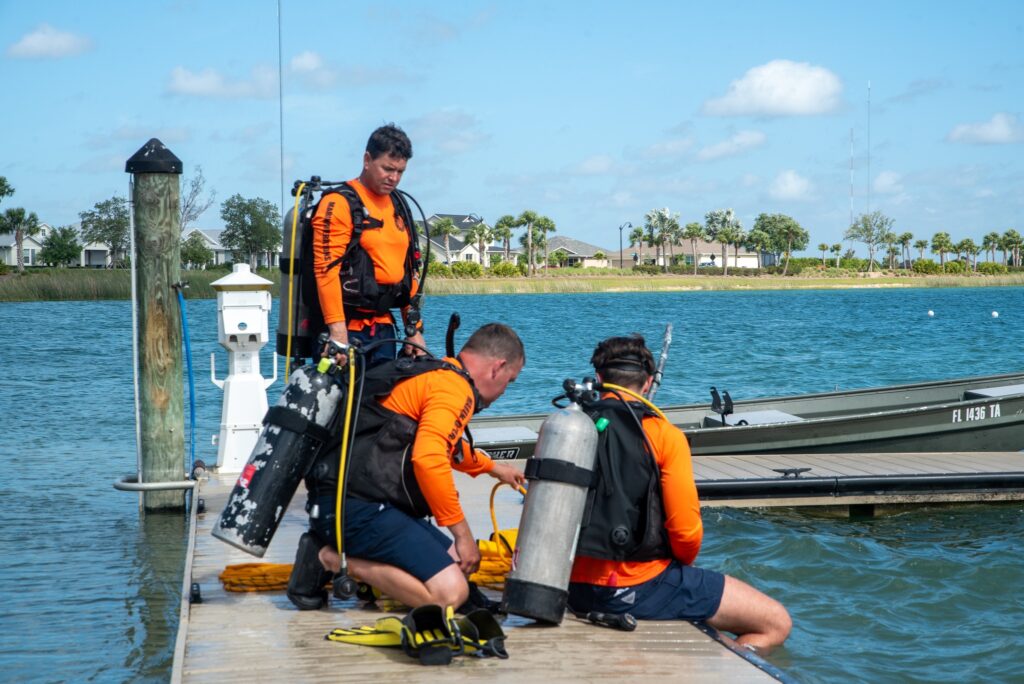
Marine One responds to emergencies in the same jurisdiction as the Boca Grande Fire Department boat, as well as all the way up into Sarasota County, he said. Part of the job for those in the Marine Unit is general monitoring of the waterways.
“We require them to be on the water at minimum of twice a week to do their standardized training,” McElroy said. “And just overall monitoring the water. They’ll go out, just checking for navigational hazards and things like that. So that way, they’re able to respond at night if it’s not lit up, or anything like that.”
Marine One will help cover the whole county, but its jurisdictional area is usually to the Myakka River, and then 25 miles offshore, he added.
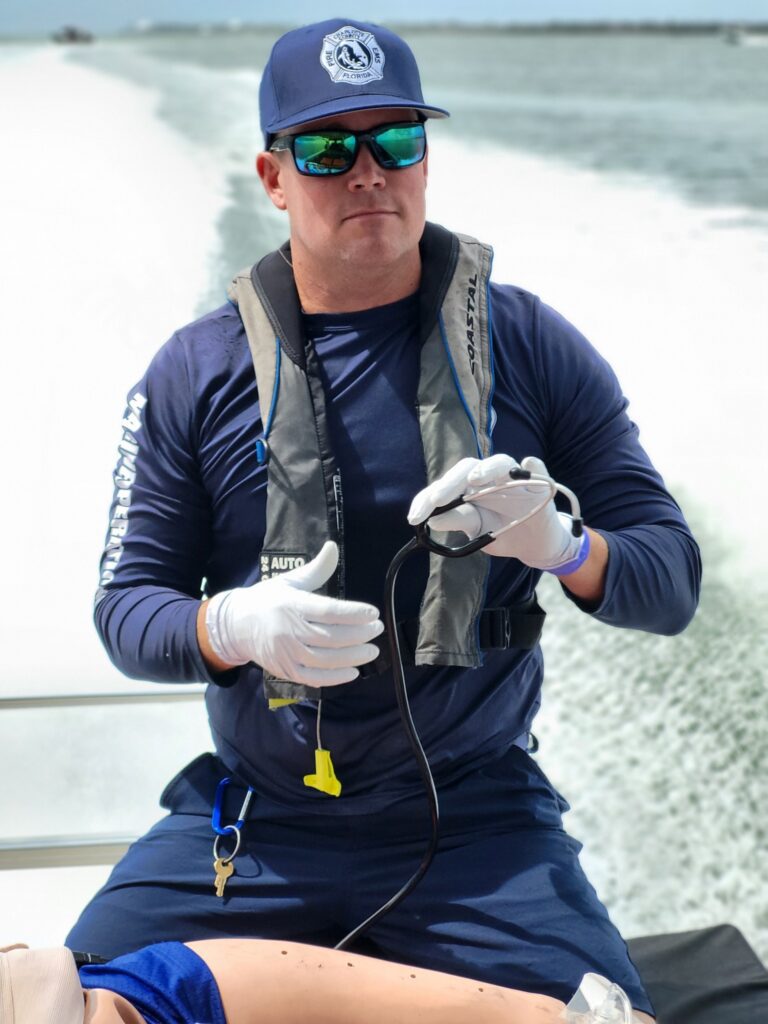
Each year, Marine One assists with the Memorial Day H2O Music Fest off Gasparilla Island, as well any other big sandbar parties. The Marine Unit partners with Lee County’s Marine Emergency Response Team (MERT), which provides communication among agencies when marine emergencies require a multi-agency approach.
When a marine emergency call comes in, it is either by cell phone, radio or emergency locating beacons. The Coast Guard can then activate MERT so that a text is sent out detailing the emergency and location to the correct responders. This limits the delay of one dispatch center having to call another.
“The closest Coast Guard station is Fort Myers or St. Pete,” McElroy said “There’s an auxiliary station in Venice. So you have all this waterway area that is missing help, essentially. So that’s kind of what we took over. We went from guys that know how to drive boats to fully qualified captains with 100-ton captains’ licenses. All of the guys have 25-ton captains’ licenses, but some have increased their license capabilities up to 100 ton. So, it’s kind of neat what our team has turned into. We went from, I used to call it boat rides, to professionals.”


