


IN THE SPOTLIGHT: A look at Florida’s consolidating, valuable marina industry

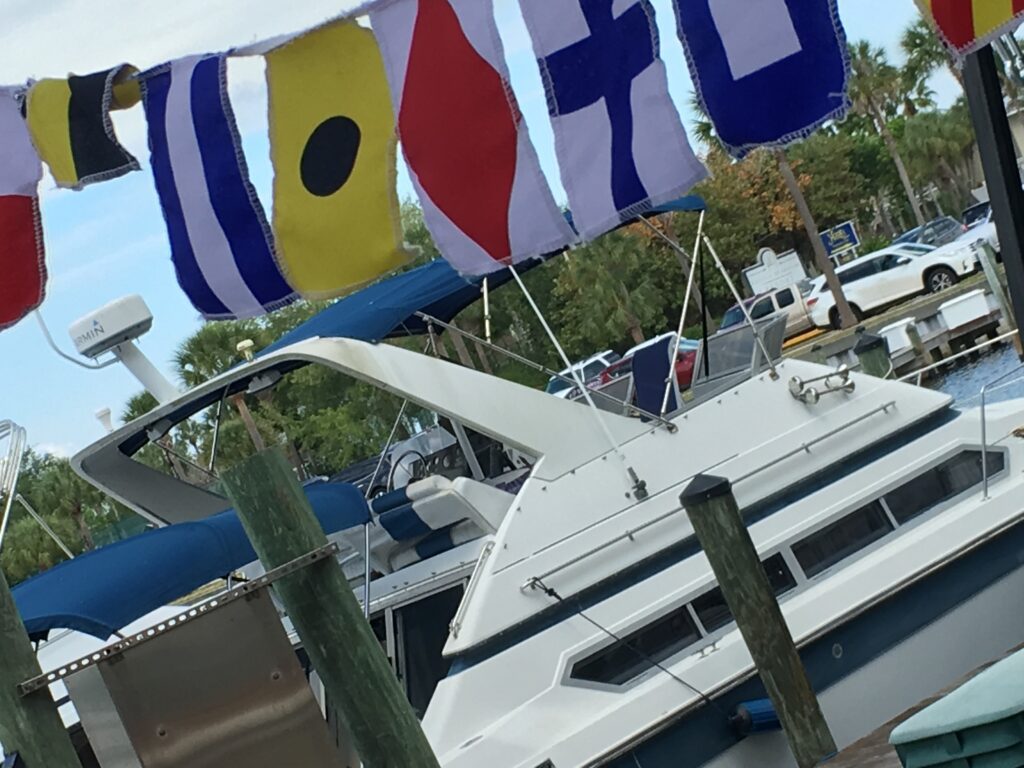
Above, the Little Harbor Marina in Ruskin, just south of Tampa. It was purchased in 2021 and is now advertised as a Suntex Experience. It has operated there since the 1950s. Photo by Garland
John Good, executive director of the Marine Industries Association of Southwest Florida, runs local boat shows, including in Charlotte and Lee counties. This week, he was returning from yet another successful yearly state conference of the Marine Industries Association of Florida.
“The boat business in Southwest Florida is doing fine. People are buying boats and getting boats serviced,” Good said.
But there are issues. Discussions included pressures and trends in marinas, environmental review and a presentation on the importance of so-called working waterfronts. A theme? As much as boating is essential to Florida’s economy, and supported by the state, there are pressures with the costs of waterfront land, and ensuring access to the water.
“It’s a huge issue nationally,” Good said. “Water access issues are huge. We are losing so many marina opportunities for the public.”
Good mentioned the Salt Creek area of St. Petersburg, where there were three marinas five years ago, and today there is just one. It is an affluent residential area, where people want and need boats, but the marinas did not survive the run up in real estate prices. Municipalities are finally beginning to understand the need to protect waterfront access, not only for general boating but for the working waterfronts and marine industries.
“We have lost all those to development,” Good said.
Florida’s marina industry is consolidating fast. Safe Harbor Marinas (Blackstone Infrastructure) leads with more than 150 marinas nationwide, 19 in Florida, and is set to absorb MarineMax’s 65 locations in a pending $1.5 billion deal. Suntex Marinas now holds over 30 Florida locations after merging with Windward Marina Group. Westrec Marinas and Equity LifeStyle Properties are also major operators.
In St. Petersburg, the city sees its waterfront and municipal marinas as part of its economic development and tourism. They are about to embark on a huge restoration process, Good noted.
Overall, Florida’s marine industries include $31.3 billion in annual economic activity in Florida, supporting 109,912 jobs and about 7,146 businesses, according to National Marine Manufacturers Association 2023 Economic Impact Study.
“Marinas are an important piece of Charlotte County’s economic infrastructure because their impact goes well beyond the slips themselves,” said Kay Tracy, director of Charlotte County Economic Development. She noted that while a marina may occupy an extremely valuable waterfront property, its economic contribution cannot be measured solely by the revenue generated on that parcel.
“They support boat owners and visitors. But they also generate demand for marine technicians, mechanics, electricians, boat dealers, fuel suppliers, parts and equipment businesses, marine construction, dock and seawall contractors, fishing guides and charter operators, restaurants, hospitality and other waterfront businesses,” Tracy said. “There is an economic-development connection between preserving access to the water and maintaining the businesses and skilled workforce that make boating possible.”
But keeping these places open is a challenge, particularly after hurricanes. Most waterway bottom land is owned by the state, but rebuilding permitting is a challenge, and it also involves federal Army Corps approval. The growing size of boats is also an issue, which means that ramps just don’t work as they did, and when things are rebuilt, they often have to be redesigned.
“It doesn’t make any sense to rebuild a boat ramp the way it was,” Good said. “You have got to upgrade them.”
The Florida boat audience changed a bit after recent hurricanes, as the biggest sales were luxury boats whose owners did not have to worry about cost.
“We are beginning to see that middle buyer come back into the market,” said Good, referring to the 22- to 25- to 30-foot boat. He notes that the top-selling boat model in Florida last year was the Sea Hunt. The challenge is not just affording the boat, but finding a place to keep the boat. “People who love boating and water, they kind of figure it out,” Good said.
Rick Roughen of Boca Raton is perhaps the state’s leading broker of marinas and marine-related companies through his company, National Marina Sales. He says there is great demand for Florida marinas, and escalating prices.
“I’m getting calls every day and I’m finding them all to be people that I haven’t dealt with in the past, I’m shocked,” Roughen said. “The numbers are incredible. We got stuff in the Keys. We got stuff up and down the coast that we’re selling, and the sellers are expecting more money.”
In the marina industry, the primary “golden nugget” for buyers is storage income. Second is a ship’s store and fuel on the docks. “The buyers are fighting to get it for less. The financial statements are scrutinized very closely, and all the buyers tend to look for value-add opportunities where they can take over and increase their profitability,” Roughen said.
The boat service part is important, but more difficult. That can also happen offsite, in industrial parks.
“That’s a very difficult business to run, and I have to advise many who are coming into the industry to weigh that very carefully,” Roughen said.
Many of Florida’s older marinas have owners who are getting older and want to retire, or they have children who do not want to take over.
“The [big] firms are experts at gleaning additional value-add out of an opportunity, and they’re not afraid to raise the rates and do what they’ve got to do to make it happen,” Roughen said. “Whereas, most marina owners have a lot of friends on those docks, and they like to keep their rates at a level that doesn’t upset everybody.”
As with so many industries, Florida marina owners are seeing personal visits from well-financed operators, who will even offer to appraise a marina for free, and will wine and dine owners. Roughen advises getting a broker in the middle, to protect the seller.
“The teams now go out and basically approach all these marina owners individually,” he said. “They show up at the doorstep and they want to talk. And when one of these big groups walks in and sits across the desk from a marina owner, that guy feels pretty important.”
Above all, they want the ultimate prize: a Florida marina. Unlike the northeast, they operate all the year ‘round.
“As far as pricing and quality goes,” Roughen said, “Florida’s the best. It’s a year-round seasonality. Boating’s going on all the time.”


