


SPOTLIGHT: Don Penrod at the sinking of the Andrea Doria

The 70th Anniversary of Andrea Doria sinking July 26, 1956
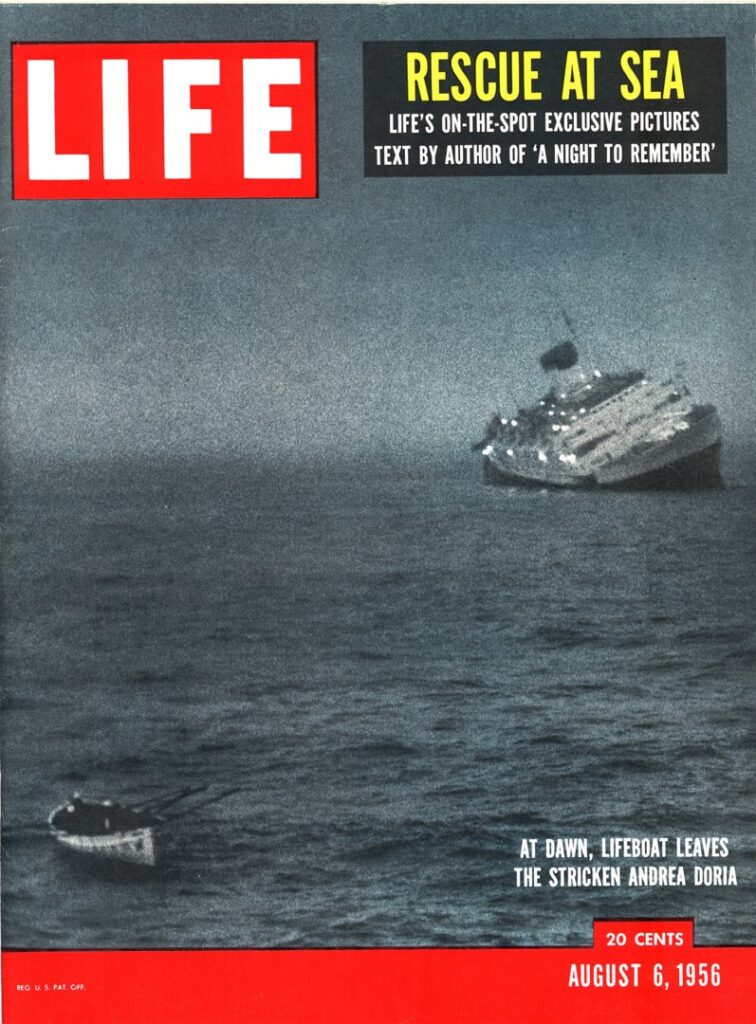
Perhaps one of the most famous maritime disasters, and the first steamship disaster to receive extensive television coverage, was the sinking of the Italian luxury ocean liner S.S. Andrea Doria. On July 26, 1956 at 10:09 a.m., almost 70 years ago, the liner sank just off Nantucket after colliding with the Swedish liner Stockholm. The collision tore a large hole in the Andrea Doria’s starboard side.
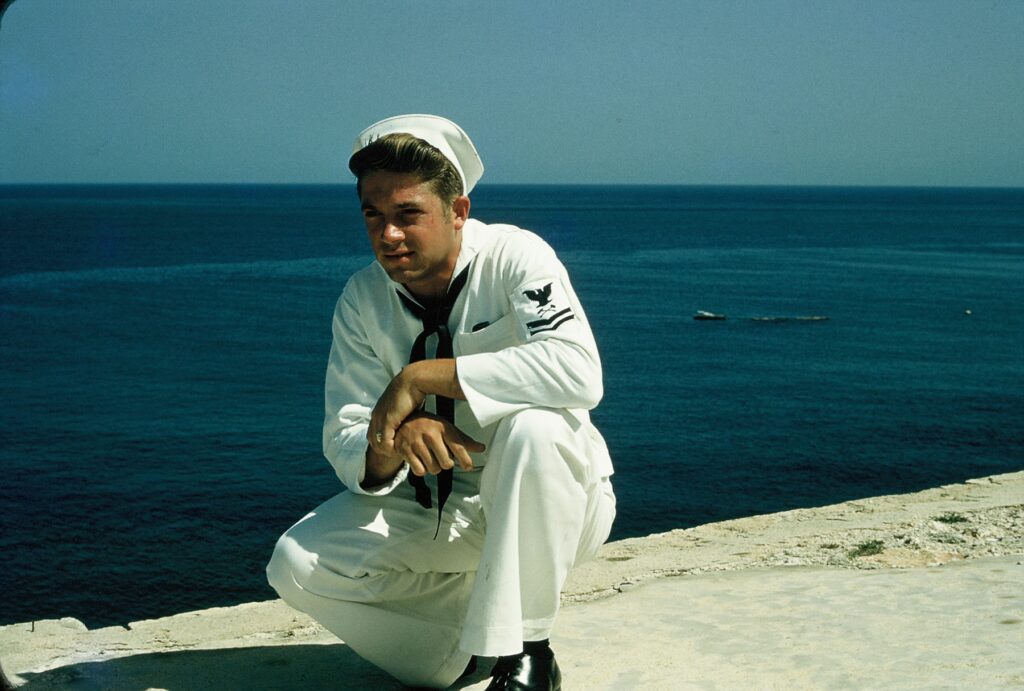
Placida resident Don Penrod was at the rescue scene as a young Coast Guard damage-control cadet, along with 150 other enlisted cadets and about 30 officers aboard the USCGC Campbell. He has vivid memories of the day he heard about the wreck.
“It was an SOS to all the ships at sea. And luckily, the Isle de France was very close and came onto the scene,” Penrod recounted from his home office last week. “She was on the scene, and had hospital quarters, and all kinds of things, and lifeboats, and really saved a lot of passengers.”
The Campbell was an escort ship to the USCGC Eagle, the Coast Guard sailing ship. One of the Campbell’s jobs was International Weather Patrol, a group of ships that was set up to monitor weather on the seas after the sinking of the Titanic.
The disaster came about as the Andrea Doria was westward-bound from Italy and the Stockholm was headed out of New York. The fog was thick. Penrod, who is active in the Englewood Coast Guard Auxiliary, published his analysis of the disaster. It was remarkable in that while the two ocean liners collided at sea during fog, the rescue effort saved 1,600 passengers and crew. A total of 46 people died aboard the Andrea Doria and five aboard the Stockholm. The Andrea Doria remained afloat for 11 terror-filled hours before she sank. A girl was found in the mangled bow area with only a broken arm, labeled by the press as the “Miracle Girl.”
The Stockholm survived because she was built for the fjords of Norway and Sweden. “She had a very strong bow and watertight compartments that would be sealed off,” Penrod said.
Video from aircraft based in Boston and New York captured the scene. Up close, Penrod had missed the horror of the immediate hours after the disaster, as passengers slid down oil-slick decks and jumped into the Atlantic. Penrod has reflected often on the disaster.
“They were on the wrong side, you know, for where they were going,” Penrod said. “Every correction they made was devastating.”
If they had been in opposite positions, they would have passed one another, which is a basic boating courtesy when two vessels approach each other.
“The positions that they had were just reversed,” Penrod said. “Every move that they made got them closer together.”
When the Coast Guard arrived at the scene, that allowed the Isle de France to head back with the survivors. Not only had the French liner rescued passengers, but its hospital operation and lighting also helped at the scene. Because it was summer, the water was warm and calm, though the Andrea Doria listed, making half of its lifeboats unusable.
“The Stockholm stayed in the area, and we stayed in the area,” he said. “And the [USS] Yakutat was the other Coast Guard ship. There were also helicopters and planes above, as it was just off Nantucket. The Isle de France did the job right, but you never know.” The Coast Guard tried to collect as much as possible from the scene.
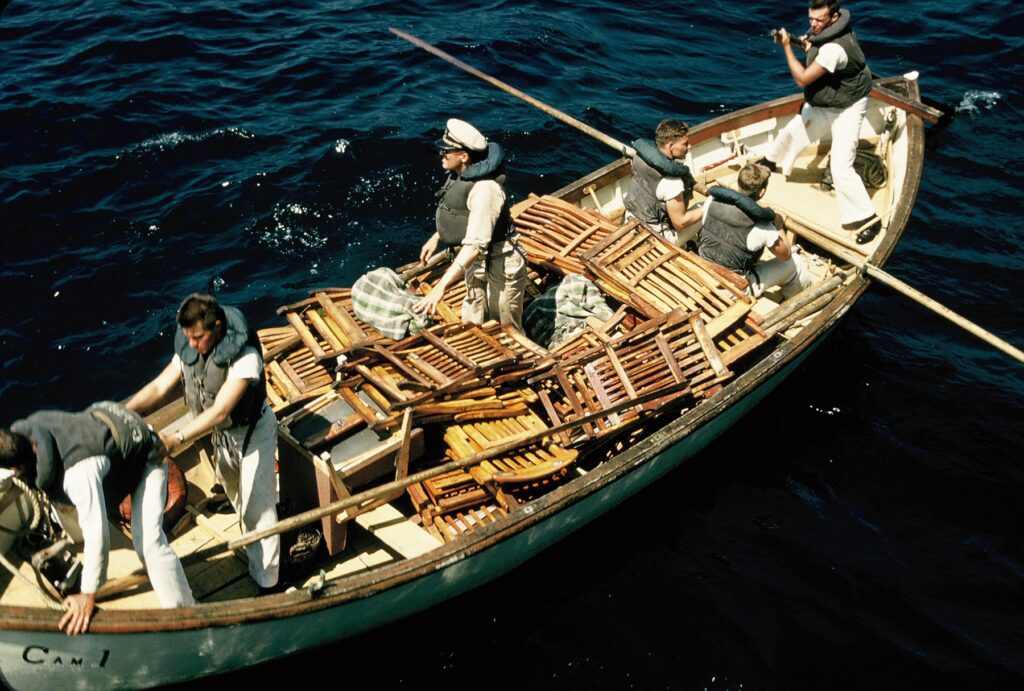
“Immediately they lowered our boats and looked for survivors,” said Penrod, who assembled a set of color slides of the wreckage. They collected all that they could find, including passenger steam trunks or whatever flotsam was coming up, including deck chairs and sharks, right off the bow, as the Andrea Doria went down in about 255 feet of water. They looked for bodies and collected personal effects that would be given to authorities.
“You just would see it come out of the water,” Penrod said.
When the Coast Guard arrived, and because the Stockholm was still seaworthy, she went back into New York with survivors.
“So we stayed in the area for about 10 hours, then we escorted the Stockholm back toward New York,” Penrod said.
While the rescue went well, in good weather, the disaster did not have to happen. Numerous news stories and documentaries have tried to determine the exact lessons of the wreck. Both captains had made the same trip numerous times, Penrod said. They also had the latest navigation equipment, including radar.
After four years in the Coast Guard, Penrod spent four years in the Coast Guard Reserve. He was never called to active duty and embarked on a mechanical engineering career, first in steel and then with Ford and Mazda.
What he learned in the Coast Guard would serve him for the rest of his successful engineering career. After working in the steel industry, Penrod started at Ford World Headquarters. For Ford, he built and directed construction of the Michigan Casting Center, a 3-million-square-foot facility that was the biggest foundry in the world in 1970, a $150 million project. He shut it down for Ford in 1981. It later reopened.
“I was there when we put the foundations in, and whenever they shut it down because of oil embargoes, they left me behind with a guard and security guy, three of us, 5,000 people left, and that plant was mine,” Penrod said.
They sold the pieces of the plant for scrap. After leaving Ford, he worked for Mazda when Ford was part owner.
He hoped to one day sail on the Stockholm, which later sailed as the luxury liner Athena and then Astoria, but was unable to take a trip.
In 1957, he married his wife, Marlene; she died in 2024 after a long, happy marriage. He has a son, daughter-in-law and granddaughter in Michigan.
Each year, there are fewer and fewer survivors of the disaster. On the 50th and 60th anniversary, there were a few locals left.
“I can’t say enough good things about what the Coast Guard did for me, and the training that I had in damage control and the crew,” Penrod said. “It never leaves you.”
A video of this interview, done jointly with Island TV’s Rick Montgomery, is at BocaBeacon.com/andreadoria


