


Founding Fathers: They laid it on the line
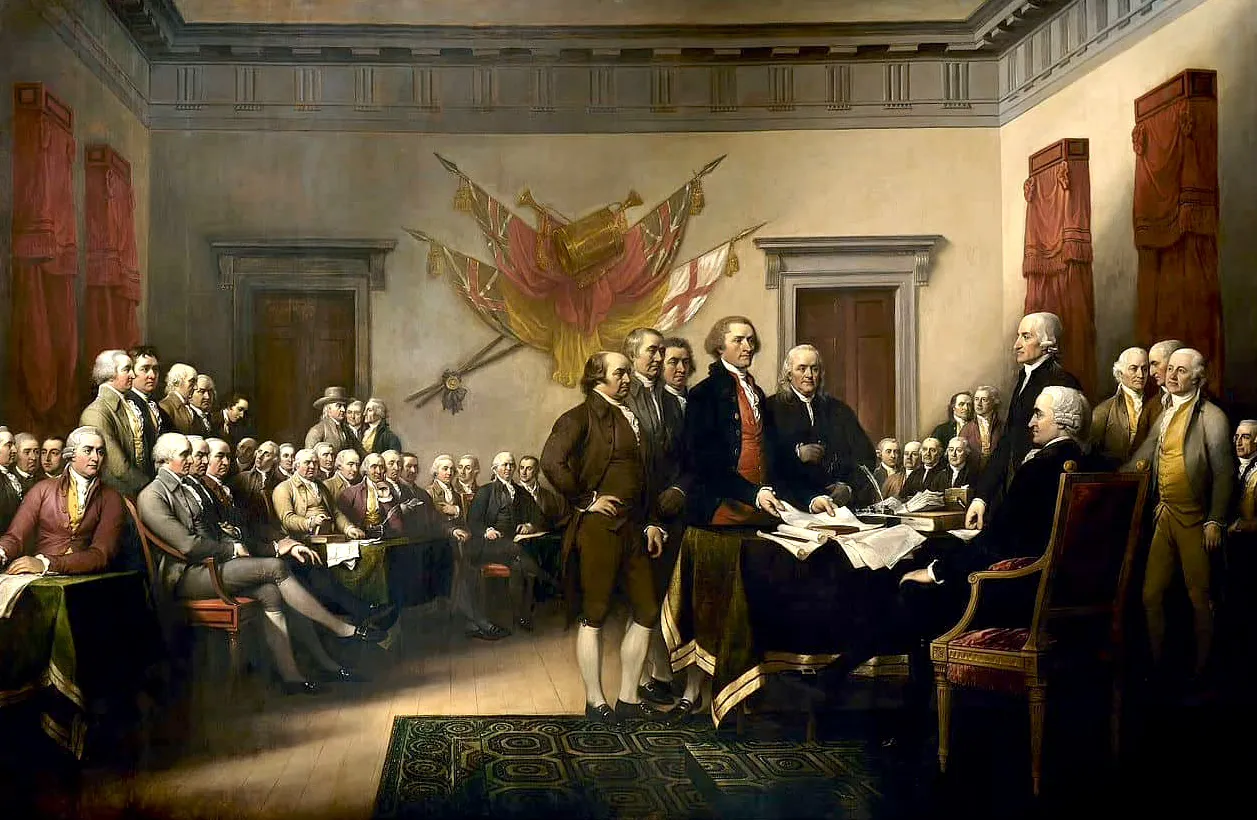
The founding fathers of America are frequently counted merely as the privileged and the victors. In the common (mis)understanding of American history, they were simply the nation’s wealthiest elite – men who had the most to lose if the revolution failed, but who ultimately cruised through to glory.
But the reality was far different. A staggering number of the signers of the Declaration of Independence had their lives utterly ruined by the very forces they unleashed.
Consider Philip Livingston, a wealthy New York importer. His businesses were seized and his estates confiscated. His family became refugees, and he died after selling off every remaining bit of his property just to help the fledgling United States maintain enough credit to pay for the war.
In New Jersey, John Hart was chased through the woods by Hessian mercenaries while his wife lay on her deathbed. At age 65, Hart was forced to sleep in caves and forests. When he finally returned home, he found his wife dead and his 13 children taken away. His fellow New Jerseyite, Abraham Clark, watched his sons get captured and sent to the notorious British prison ship Jersey – a floating hell where 11,000 Americans were left to die. The elder Clark refused to recant. Today, his Wikipedia page notes that he was a slaveholder, yet it says nothing of the immense suffering he endured for the birth of his country.
The story was the same across the colonies: John Witherspoon, president of the college that would become Princeton, saw his library burned and British troops billeted in his home. His friend Richard Stockton, betrayed by Tory loyalists, was dragged from his bed, beaten, and starved in a brutal jail. He died broke, his family forced to live off charity. His looted home, Morven, was only saved much later when it was restored by Robert Wood Johnson to become the New Jersey Governor’s Mansion.
William Ellery of Rhode Island had his house burned to the ground. Thomas Lynch Jr. of South Carolina suffered so intensely from wartime privation and exposure that during a voyage meant for his recovery, he and his wife drowned at sea.
Three other South Carolina signers – Edward Rutledge, Arthur Middleton, and Thomas Hayward Jr. – were taken as prisoners of war to St. Augustine, Florida, while their plantations were systematically destroyed.
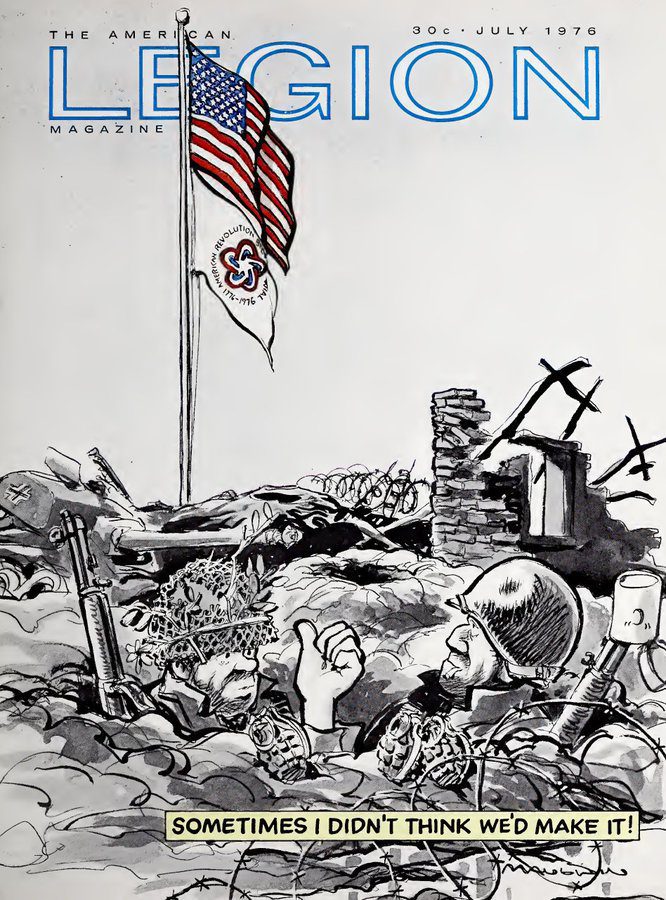
In July 1976, as part of the nation’s Bicentennial, The American Legion Magazine published a history of these men entitled, “They Put It On The Line.” Written by Texas historian T. R. Fehrenbach, the piece was actually a reprint from 1965. It resonated deeply. In an era before Xerox machines were widespread, teachers and citizens inundated the magazine with reprint requests.
I came to know this story because my late grandmother, Katharine Byrd Miller, kept a copy reprinted by the Texas branch of the National Society of the Colonial Dames, championed by the historian and philanthropist Mollie Steves Zachry.
Fehrenbach summed up the stark reality far better than I ever could:
“Of the 56 who signed the Declaration of Independence, nine died of wounds or hardship during the war. Five were captured and imprisoned, in each case with brutal treatment. Several lost wives, sons or family. One lost his 13 children. All were, at one time or other, the victims of manhunts. Twelve signers had their houses burned. Seventeen lost everything. Not one defected or went back on his pledged word.”
When they signed that document, they fully expected a hanging – the standard British price for treason. Yet, as William Ellery watched his colleagues put pen to paper, he noted that not a single face showed fear. Instead, there was a grim, defiant humor. The stout Benjamin Harrison of Virginia reportedly told the slender Elbridge Gerry: “With me it will be over in a minute. But with you, you’ll be dancing on air an hour after I’m gone.”
Even as the war wound down, the sacrifices continued. When British forces occupied Yorktown, Lord Cornwallis took the home of Thomas Nelson as his headquarters. Out of respect for Nelson, the American forces initially hesitated to fire upon it. At Nelson’s own insistence, he ordered his troops to open fire on his own house to dislodge the enemy.
During the 1976 Bicentennial, the federal government dedicated a small monument in Washington, D.C. in their honor. It bears the immortal closing excerpt from the Declaration:
“And for the support of this Declaration, with a firm reliance on the protection of divine Providence, we mutually pledge to each other our Lives, our Fortunes and our sacred Honor.”
As we arrive at the 250th anniversary of the Declaration, freedoms feel increasingly imperiled, and the government maintains a hand in every minute aspect of our lives, right down to the phones and every bit of text in our pockets.
This forces a vital question for us today, living in our comfortable modern world: What have we put on the line?
How can we truly honor their memory in these future weeks, and in years ahead? Whatever our current situation, we must begin by remembering, with deep gratitude, the cost they paid for us. In that era, America’s elite was prepared to do what it took.
Find out more: The original American Legion story is HERE, in full.
Garland Pollard is editor of the Beacon. Email editor@bocabeacon.com


