


Volley from grass of Wimbledon to Florida

Hank Irvine
There’s tennis royalty living just off the Gasparilla Causeway in Cape Haze. He would laugh at that description of himself, but then he laughs easily. Hank Irvine has been playing tennis his whole life and has qualified for Wimbledon three times, once getting to the semifinals in mixed doubles play, earning him a spot in the prestigious Last 8 Club.
The Last 8 Club is an honor group of those players who have made it to the last rounds in their division at Wimbledon. Membership perks include a photo-pass each year to access the grounds every day of the tournament, a guest pass, use of the private “Last 8 Club hospitality suite,” daily match tickets for both Centre Court and No. 1 Courts and a cocktail party invitation on the second Tuesday of the championships, according to Forbes Magazine, which featured the elite grouping some years ago.
The club is a way of rewarding and honoring those who have been at the peak of their game in the top of the competition world, which is Wimbledon. Hank and his wife, Karen, attend the tournament nearly every year and just received their invitation to this year’s event.
Hank was born in what is now Zimbabwe (formerly the British colony of Southern Rhodesia). His father was a serious athlete and could compete in nearly any sport he undertook. Hank followed in his footsteps and excelled in tennis, squash, cricket and field hockey in both high school and college.
“Once I left college, I started to zero in more on squash and tennis, and I was also still playing a little field hockey,” Hank said. The 1964 Olympics were held in Tokyo, and Rhodesia entered a field hockey team. “I was selected to be on the team; however, they said, ‘If you want to compete, you can’t play tennis or squash.’”
He continued: “I felt tennis and squash were great as fitness games, but they said I had to focus on field hockey. So, I decided not to go. Now I look back at that and think, ‘You idiot! You should have listened to them and just for four or five months you practice with the hockey team, and once you get back from Tokyo you can go back to tennis.’”
That lapse of foresight has not really hindered Hank’s career. He went on to make a name for himself, even without an Olympic medal.
Today, at 81, Hank is still entering tennis competitions, winning medals as recently as last year. He actually plays for the Zimbabwe team, even though he and his teammates have been U.S. citizens for years. That competition was held last April in Turkey. Eleven countries were represented in the International Tennis Federation World Masters Team Tennis Championships.
In the “players 80 and over,” Hank and his three teammates beat France, top-seeded Australia and almost beat the U.S. They emerged as the silver medalists.
“Nobody likes losing to Zimbabwe,” he joked, but everyone in the competition respects them now. “First time ever for Zimbabwe that we ever won anything, so it was exciting.”
Winning is important to Hank, but it is not everything. He has seen the world, met wonderful people, and has had a good life as a result of sports. After high school, Hank attended three years of college, getting his teaching certificate. He continued playing multiple sports, and expected to make his living in sports, rather than teaching.
“I got my teacher’s certificates,” Hank recalled. “They had a wonderful system. My parents couldn’t afford to send me to college, but you could go and the government paid for it. Then you had to work for three years for the government, which paid your college fees back. So I did that. Three years of college and I also played tennis, squash and cricket.”
But then he had committed to teach for three years, which meant he could not travel and participate in team competitions.
‘‘The last two years of teaching I switched back and forth between tennis and squash, and I was trying to decide which is the one I am really going to pursue,” he said. “Finally, I decided that tennis was really what I should do. And then I got selected to be on the Davis Cup team, which is the World Cup of tennis.”
Once he was on Rhodesia’s Davis Cup team, he was on track to play tennis throughout Europe. The first tournament brought him to Sweden. However, this was when the political scene in southern Africa was beginning to boil. The idea of colonial rule was being challenged from many fronts, and the support for “majority rule” was strong throughout Europe, where the Davis Cup is played.
“We drew Sweden in the first round, and we were to play in Bastad, which is on the coast. Bastad is where all the big tennis matches are held. Beautiful place; wonderful people live there. They are all over their tennis and so on. We were there for a week. All five days we were practicing, and people are watching and we had the best time. The Friday that the match was supposed to start, 5,000 students arrived from Stockholm and set fire to the stadium because there were no Black people on the team.”
The Rhodesian players had to flee from the violence. “We couldn’t play, so it was kind of a scary thing. There were police everywhere, and dogs, and helicopters and thousands of students everywhere. So we fled the country,” he said. They ended up playing in France that year. Over the next few years similar protests arose, and they were forced to play in other European countries that had colonial interests in Africa.
“And then one year I came here, to the States. In those days, when you traveled and played you stayed with members of the club where the tournament was held. I played in Cincinnatti, Indianapolis, wherever. And they had a tournament in New Jersey, at Orange Lawn Tennis Club which was the week before Forest Hills, where the U.S. Open is held.”
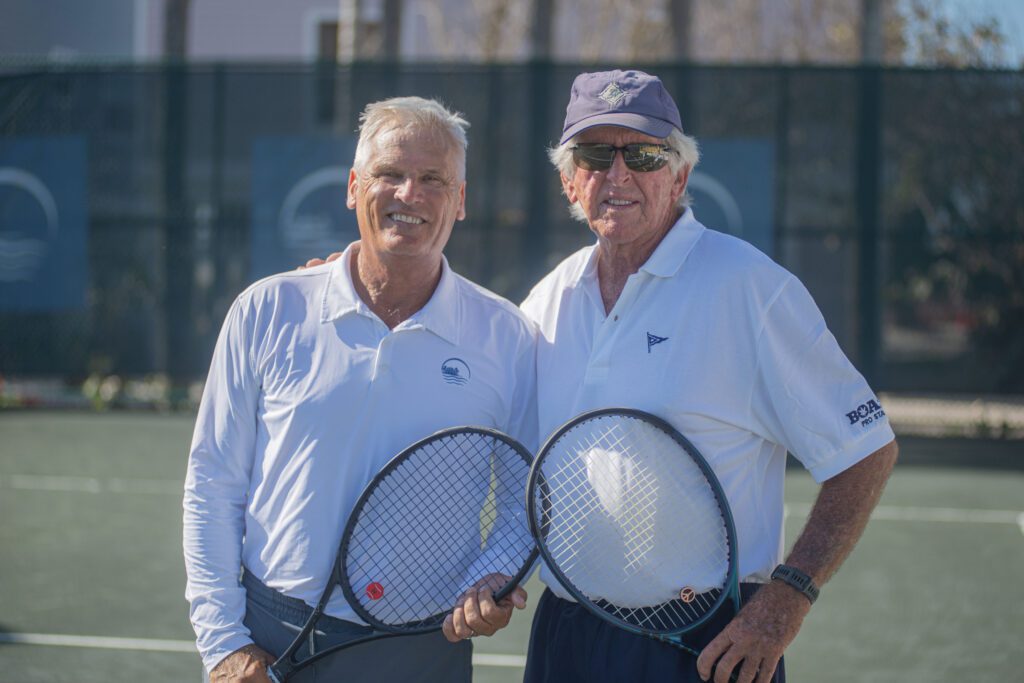
He continued: “I stayed with a family there who were members of another local club (Short Hills Club), wonderful people, and just so good to me. They said, ‘Our club pro is leaving next year. Would you like to be the pro at the club?’ I said, ‘I can start tomorrow if you want!’ Because you take any young guy anywhere in the world and you say, ‘Listen, I can get you a job in the USA,’ and I mean, sign me up! I couldn’t wait to do it.”
Hank had already committed to play another year as part of the Davis Cup team, so he continued on the tour. At that point he met the board of the new club, and they were excited to have him. They offered to take care of his green card, and everything else he would need. There was a New York lawyer who would handle all the details. The following year Hank returned and started what would become a 23-year relationship between the club members and the new tennis pro.
“They were wonderful to me and really, in a way, kind of turned my life around. At that stage I wasn’t doing anything on the tour. ” The alternative, he saw, was to go back to teaching in a country still in upheaval. It was an easy decision for him to stay in the U.S.
One of the club members also became a mentor to Hank, helping him through the intricacies of money management, credit cards, operating a business — and this person also was the match-maker between Hank and Karen, who within a year or two became Hank’s wife. Hank became an instant father, loving and parenting her three young children. Today, Karen and Hank have been married 46 years and the Irvine team now includes inlaws and grandchildren. Hank could not be happier.
Short Hills also introduced Hank to a new game he had never known about. It is platform tennis, which is designed to be played in cold weather. Hank not only learned the game, he excelled in it, becoming a member of the Platform Tennis Hall of Fame.
The write-up in the Hall of Fame says: “Hank Irvine was a player who changed the game and was always exciting to watch. His shot-making and control of the ball set new standards, and he had great hands and ease of stroke, coupled with economy of body movement and consistency.“
These attributes were what made Hank stand out in all the sports he played. Then, after 23 years at Short Hills and lots of success, Hank and Karen decided it might be time to retire. They had been coming to Florida for vacations and had a place at South Seas. They moved around and stayed on Captiva between seasons and moved to Palm Island in 1984.
“We bought this house in ‘87 (in Cape Haze) and we’re still here. And it’s been a wonderful ride.” For a while he still worked as a pro during summers in Nantucket, and he still competes in senior tournaments throughout Florida and internationally.
“I just absolutely love it down here!” he said. He enjoys the climate, which is similar to Zimbabwe’s, although it is more humid here due to its lower elevations. He enjoys playing tennis with Dusty Hopkins and others at the various courts in Boca Grande. He is serious about staying fit, saying that “being unfit is unacceptable. No excuses. It is unacceptable. Whatever age or shape —unacceptable.”
Unfortunately, Hurricane Milton challenged him on that discipline. The Irvine home in Cape Haze was seriously flooded from that storm. Nearly every piece of furniture, cabinets, flooring and more were destroyed. Hank and Karen moved from location to location in the area during the storm’s aftermath. It has only been a couple of weeks since they have returned to their own home. Initially there were no appliances and few slavageable household goods, so there was a lot of eating out, dealing with contractors and missing workouts, all of which have left him unacceptably out of shape.
“It used to be that I could return to fitness by Friday, now it is more like three months!” But he has returned to the gym and is again watching his diet, and is feeling almost back to fitness again. He is looking forward to participating in some upcoming senior tennis tournaments in Sarasota and other places around the state.
One of his long-time Zimbabwe tennis teammates died last year and Hank attended a celebration of his life in January. That celebration put some things into perspective for Hank. He is no longer overly anxious about getting the house back to normal, but is enjoying the sunny weather and appreciating the progress they have made in bringing normalcy back to their home. He has started working in his garden again and feeding the birds who stop by for a handout.
“I’m still here,” he noted. “I can still go play tennis. I can still talk about going this year to the tournaments in Croatia in October. I do manage to play maybe once a week or twice a week. It’s my life, essentially. I was born and raised with a tennis racket. But you have to put things into perspective. I’m very fortunate to be able to do what I did. Tennis is such a wonderful game, and the social side and getting in with such wonderful people. It’s my life!”


